Truck Repair Shop Marketing to Get More Calls and Fleet Accounts

Truck repair is not a generic local-service business. Your best customers may be owner-operators dealing with an urgent roadside breakdown, fleet managers searching for a dependable maintenance partner, or commercial operators that need specialized diagnostics and repairs completed under time pressure. Each of these buyers searches differently, evaluates differently, and requires a different message to convert.

Heavy Duty Advertising specializes in digital marketing for heavy-duty and automotive repair businesses. We combine industry-focused SEO, Google Ads, conversion-driven websites, local search optimization, content marketing, reputation management, and marketing automation to help truck repair shops turn online visibility into measurable service opportunities.

If your shop has the capacity to handle more work but is not consistently attracting the right inquiries, your marketing strategy may not be reaching the right buyers at the right moment. That is the problem we solve.

Why Truck Repair Shops Need Specialized Digital Marketing

General marketing campaigns attract general traffic. Truck repair shops need visibility for commercial-intent searches tied to diesel diagnostics, brake systems, driveline repair, electrical troubleshooting, DOT inspections, preventive maintenance programs, mobile breakdown response, and fleet service contracts — not simply broad consumer searches.

The buyers you want are not the same as someone searching for an oil change. Fleet managers, owner-operators, and commercial transport companies evaluate vendors based on capability, response time, certifications, and track record.

Our strategy starts with the work you want more of: the equipment types you specialize in, the territory your shop can serve, your bay capacity, your mobile service range, and the types of commercial accounts you want to win. From there, we build a marketing system around those specific objectives.

Understanding the Truck Repair Buyer Journey

Commercial repair buyers do not behave like residential consumers. A fleet manager evaluating shops for a preventive maintenance contract will research multiple vendors over days or weeks. An owner-operator with a blown turbo needs a shop now, within driving or towing distance, that can handle the job today.

Your marketing needs to address both ends of that spectrum. Urgency-driven searches require strong local SEO and Google Business Profile optimization. Long-consideration buyers require trust signals: case studies, service capability pages, certifications, and reviews from recognized commercial operators.

When your digital presence speaks to both buyer types with the right content in the right format, your shop becomes the obvious choice rather than one option among many.

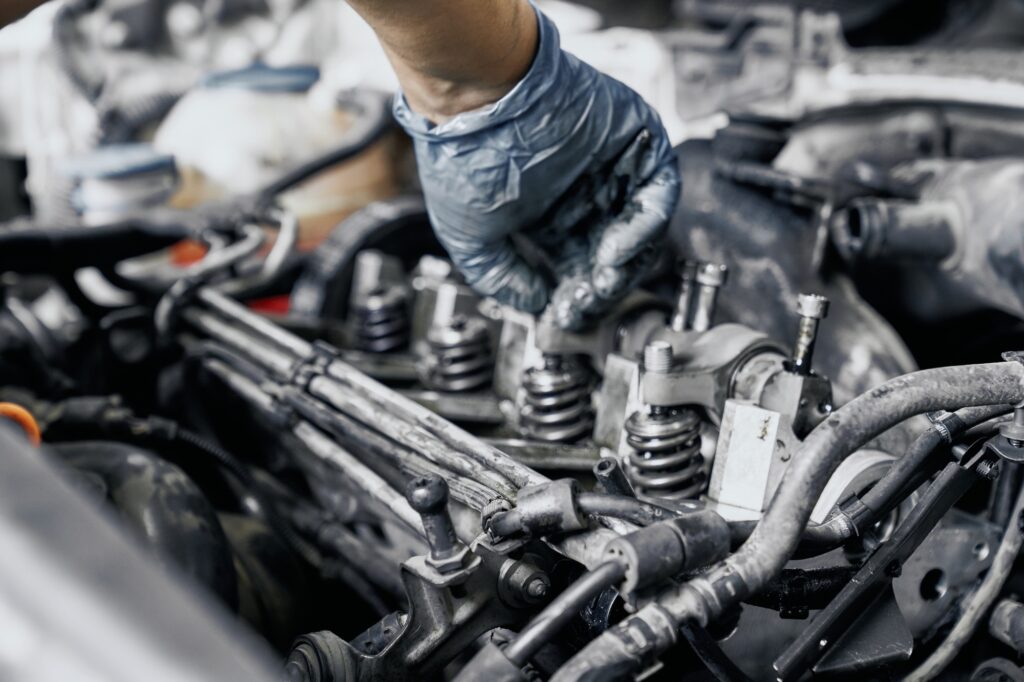
Close up of nozzles in diesel engine under opened bonnet

Build Visibility Where Truck Owners and Fleet Managers Search

Search visibility for truck repair starts with two interconnected systems: your Google Business Profile and your website’s organic rankings. When both are optimized and working together, your shop appears for the searches that matter most — high-intent, location-specific queries from buyers ready to act.

Local SEO and Google Business Profile optimization help your shop compete for nearby repair searches across Google Maps and organic results. Dedicated service and industry pages build organic relevance for broader commercial repair terms. Google Ads can capture urgent demand from buyers who need service immediately and are ready to call.

Strong content, detailed service pages, and verified case studies give commercial buyers the confidence to choose your shop for recurring work rather than just one-time repairs.

Local SEO for Truck Repair Shops

Local SEO determines whether your shop appears when a driver or fleet manager searches for truck repair near your location. This involves optimizing your Google Business Profile with accurate service categories, photo documentation, response management, and structured posting — and building consistent citations across directories that commercial buyers actually use.

On-site local SEO includes location-specific service pages, properly structured heading hierarchies, schema markup for service and organization entities, and content that matches the specific language commercial repair buyers use when searching.

When done correctly, local SEO places your shop at the top of Maps results for the repair categories you want more of — diesel engine work, CVIP inspections, hydraulic system repair, driveline service, mobile breakdown response, and fleet maintenance programs.

Google Ads for Urgent Repair Demand

Paid search campaigns allow your shop to appear immediately for high-urgency queries, even in competitive markets. When an owner-operator is 80 kilometres from their destination with a mechanical failure and pulls out their phone to search for heavy duty truck repair, a well-structured Google Ads campaign puts your shop at the top of the results before they scroll anywhere else.

Effective truck repair ad campaigns require careful keyword targeting, negative keyword management, geographic radius configuration, and landing pages built specifically to convert urgent repair inquiries.

Without those elements, ad spend leaks into irrelevant clicks. With them, every dollar is working to bring qualified, high-intent buyers directly to your phone line or contact form.

Website Development for Truck Repair Businesses

Your website is the central hub of every marketing channel. A prospect who finds your shop through a Google search, a Maps listing, or a referral will evaluate your credibility the moment they land on your site. If the site is slow, outdated, difficult to navigate on a mobile device, or does not clearly explain what you service and where, most visitors leave.

We build truck repair websites that are fast-loading, mobile-optimized, clearly structured, and designed around conversion. That means prominent phone numbers and contact options, clearly listed service categories, service area information, trust signals such as certifications and reviews, and calls to action positioned where buyers are most likely to act.

A well-built website also provides the technical foundation for every other marketing channel to perform at its highest level — SEO, ads, and reputation management all depend on the quality of the site they point back to.

Turn Search Traffic Into Real Repair Opportunities

Traffic alone is not the objective. Visits that do not result in a phone call, a service request, or a fleet account inquiry are not generating revenue. Your website and landing pages need to be built around how repair customers actually make decisions and take action.

For emergency repair inquiries, the path to conversion needs to be immediate: phone number visible at the top of the page, clear indication of what services are available, and a sense of geographic proximity and operational readiness.

For shops pursuing recurring commercial work, fleet-focused landing pages and lead-generation campaigns position the business in front of decision-makers rather than relying entirely on one-time repair jobs. These pages address fleet buyer concerns directly: response time, mobile service availability, preventive maintenance programs, and references from other commercial operators.

Content Marketing for Truck Repair Authority

Content marketing builds long-term organic visibility and establishes your shop as a knowledgeable resource in the heavy-duty repair space. Service guides, maintenance tips, equipment-specific diagnostic content, and industry-focused blog articles all contribute to a stronger topical footprint on Google.

Content that answers real questions from truck owners and fleet managers — how to identify a failing air dryer, what to expect during a CVIP inspection, how preventive maintenance programs reduce fleet downtime — attracts qualified traffic and builds trust before a buyer ever makes contact.

Over time, a well-executed content strategy reduces dependence on paid advertising and creates compounding organic visibility that general digital agencies are not equipped to build for commercial repair businesses.

Reputation Management and Review Generation

Online reviews directly influence which shop a buyer chooses, particularly for first-time customers who have no existing relationship with your business. A Google Business Profile with strong, recent reviews from verified customers outperforms competitors with similar or better services but weaker social proof.

We implement structured review generation processes that make it easy for satisfied customers to leave feedback on the platforms that matter most. We also monitor and respond to reviews on your behalf, ensuring your reputation is actively managed rather than left to chance.

For shops serving commercial fleets, reviews from recognizable operators — transport companies, logistics providers, municipal fleet operators — carry disproportionate weight with other commercial buyers.

Get a Free SEO Audit

Read Our Case Studies

A mobile-first redesign and targeted SEO increased Get ‘R Done Truck Repair’s traffic by 375% across remote Alberta.

A strategic SEO and GMB optimization boosted Hart Transmission’s visibility and leads by 50% in Edmonton’s repair market.

A strategic website optimization and targeted marketing plan drove a 67% increase in sales for JMD Ventures, selling 80% of their inventory in just 90 days.

Marketing Automation for Truck Repair Shops

Marketing automation connects your lead generation efforts to a structured follow-up system so no inquiry falls through the cracks. When a prospect submits a service request, completes a fleet inquiry form, or contacts your shop through a digital channel, automated workflows can trigger immediate acknowledgment, route the inquiry to the right person, and initiate a structured follow-up sequence.

For shops building recurring fleet accounts, automation can support post-service follow-up, maintenance interval reminders, and customer retention campaigns that keep your business in front of existing accounts between service visits.

These systems reduce administrative workload while ensuring every lead receives a professional, timely response — which directly affects conversion rates and customer retention.

Fleet Account Lead Generation

Recurring fleet accounts are the most valuable long-term revenue source for most heavy-duty repair shops. A single fleet contract can represent dozens of service visits per year, consistent revenue, and reduced dependence on unpredictable one-time repair demand.

Generating fleet accounts requires a different marketing approach than capturing urgent repair inquiries. Fleet decision-makers need to see evidence of capability, reliability, certifications, geographic coverage, and experience with the equipment types in their fleet.

Our commercial fleet lead generation strategy combines targeted content, direct-response landing pages, paid campaigns, and structured outreach to position your shop in front of the fleet managers and operations teams that control maintenance vendor decisions.

Marketing Services for Truck Repair Shops

Heavy Duty Advertising offers a full suite of digital marketing services configured specifically for truck repair and commercial vehicle service businesses. Campaigns are built around the specific growth objectives of your shop rather than a generic checklist applied across every industry.

Service options include website development, local and organic SEO, Google Ads management, Google Business Profile optimization, content marketing, reputation management, email and SMS follow-up, and AI-driven marketing automation. These services are designed to work as one connected marketing system.

The result is a system designed around repair-shop growth rather than a collection of disconnected tactics managed by a generalist agency with no understanding of how commercial repair buyers actually behave.

Our All Service Areas

Heavy Duty Advertising works with truck repair shops across Canada and the United States. Whether your shop operates in a single city, services a regional territory, or runs mobile units across multiple provinces or states, our marketing strategies are built to reflect your actual geographic coverage — not a default radius drawn around a pin.

Geographic precision matters in truck repair marketing. A shop in central Alberta serving oil and gas transport operators has a fundamentally different buyer profile than an urban shop serving local delivery fleets. Our strategies are calibrated to those differences.

What Sets Heavy Duty Advertising Apart

Most digital marketing agencies serve every industry with the same playbook. They apply the same SEO templates, the same ad structures, and the same content frameworks to a plumber, a restaurant, and a heavy-duty repair shop — and wonder why results are inconsistent.

Heavy Duty Advertising works exclusively in the heavy-duty and commercial repair space. Our team understands CVIP inspections, fleet preventive maintenance contracts, mobile service unit operations, air brake certification, hydraulic system diagnostics, and the commercial transport ecosystem that your best customers operate within.

That industry depth means our content is credible, our keyword targeting is precise, and our conversion copy speaks the language of the buyers you want to attract.

Frequently Asked Questions

1. How can marketing help my truck repair shop get more calls and work orders?

Truck repair marketing helps your business appear when truck owners, fleet managers, and commercial operators are actively looking for repair services. Instead of relying on broad terms such as “mechanic near me,” the strategy can target commercial searches related to diesel diagnostics, brakes, driveline repair, electrical systems, inspections, preventive maintenance, mobile truck repair, and fleet service. Local SEO, Google Ads, service-specific website pages, reviews, and conversion-focused landing pages can work together to turn search visibility into calls, service requests, and qualified repair opportunities.
Your website or advertising may be attracting searches that are too broad or do not accurately represent your ideal customers. For example, a heavy-duty truck repair shop can receive low-value consumer traffic if its marketing focuses heavily on generic terms such as “auto repair” or “mechanic near me.” A better strategy defines the equipment you service, the repairs you perform, the geographic area you cover, and the commercial customers you want to attract. Campaigns, service pages, and negative keywords can then be structured around those specific opportunities.
The services you promote should reflect the work you want more of and the capabilities of your shop. Depending on your operation, this could include diesel diagnostics, brake repair, driveline repair, electrical diagnostics, inspections, preventive maintenance, engine repair, transmission service, mobile repair, and fleet maintenance. Creating dedicated content for important services gives potential customers a clearer understanding of what you offer. It also gives search engines more specific information about the types of truck repair searches your business is relevant for.
Google Ads can be effective when campaigns are focused on high-intent commercial searches and the geographic areas your shop serves. Truck owners and fleet operators may search for immediate help when a vehicle is down, making paid search useful for capturing urgent demand. Campaigns can be separated by repair service, truck type, location, and commercial intent. Negative keywords can help reduce irrelevant consumer traffic, while call and form tracking can show which campaigns are actually producing qualified repair inquiries rather than simply generating clicks.
Local SEO can be extremely important because many truck repair customers look for a provider within a practical driving or service distance. Your Google Business Profile, website, service pages, reviews, citations, and local content should consistently communicate what your shop does and where it operates. Strong local signals can help your business compete for nearby searches while service-specific content can support organic visibility. For mobile repair businesses, the strategy should also accurately communicate the areas where technicians can provide service.
The website should be designed around the actions a repair customer actually needs to take. Your phone number and calls to action should be easy to find, especially on mobile devices. Service pages should quickly explain what you repair, who you serve, and where you operate. Trust signals such as reviews, technician expertise, certifications where applicable, project photos, case studies, and fleet capabilities can also reduce uncertainty. A visitor should not have to search through several pages to figure out whether your shop can handle their repair.
Yes. Fleet customers require a different marketing approach from one-time retail repair customers. Your website can include dedicated fleet pages explaining preventive maintenance, inspections, commercial repair capabilities, emergency support, fleet billing, turnaround expectations, and other relevant services. SEO and Google Ads campaigns can then target commercial fleet searches and direct decision-makers to those pages. Lead tracking can help determine which campaigns are generating fleet inquiries so marketing can be focused on attracting higher-value recurring accounts.
Commercial customers want confidence that a repair shop can handle their vehicles reliably, especially when downtime can affect their operations. Genuine customer reviews provide evidence of previous experiences and can influence whether someone chooses to call your business. A reputation management process can make it easier to request feedback after completed work, monitor customer sentiment, and identify opportunities to address legitimate concerns. Reviews work best alongside strong service, transparent communication, and other trust signals rather than being treated as a replacement for a good customer experience.
Email, SMS, and marketing automation can help your shop stay connected with existing customers and follow up with new inquiries. Examples include service reminders, missed-call follow-up, appointment communications, review requests, customer reactivation, and fleet-account follow-up. These systems can be especially useful because customers may need additional maintenance or repairs months after their original visit. Automation can handle routine communication consistently while your team focuses on repairing vehicles and serving customers.
Measure marketing based on qualified opportunities and business results rather than traffic alone. Call tracking can identify which campaigns and pages generate phone calls, while form tracking measures online service requests and fleet inquiries. You can then compare those leads with booked work orders, repair revenue, repeat customers, and new commercial accounts. Tracking performance by service and marketing channel helps reveal which activities are generating the most valuable work. This allows your shop to invest more heavily in the campaigns and services that produce measurable business results.

See How Our Strategies Deliver Real Results for Heavy-Duty Businesses

Ready to Grow Your Truck Repair Shop?

If you want more qualified repair inquiries, stronger local visibility, and a marketing strategy built around the commercial repair industry, Heavy Duty Advertising is ready to help.

We can review your current website, search presence, Google Business Profile, and lead-generation opportunities — and show you exactly where growth is being left on the table.

Contact Heavy Duty Advertising today to start the conversation.

Let’s
Get Started

Are you ready to take your heavy-duty repair shop to the next level? Heavy Duty Advertising is here to help!Book a free consultation today, and let us craft a winning strategy to grow your business and dominate the market.
We specialize in digital marketing solutions tailored for the heavy-duty industry, including: