

- Key Takeaways
- The Commercial Buyer Journey
- Attracting Commercial Truck Leads
- Segmenting Modern Truck Buyers
- Converting High-Intent Inquiries
- The Verification Imperative
- Partner with Our Dealership
- Conclusion
- Frequently Asked Questions
- What are commercial truck leads?
- How can I attract more commercial truck leads online?
- Why is segmenting commercial truck buyers important?
- How do I convert high-intent commercial truck inquiries?
- What is lead verification for commercial truck buyers?
- How does a dealership partner help with commercial truck leads?
- What role does the commercial buyer journey play in lead generation?
Key Takeaways
- Know the complete commercial buyer journey from early research to purchase and map your web content, SEO and follow up processes to each stage. Ensure buyers can discover thorough, credible information online prior to reaching out to the dealership.
- Tailor content and keywords to buying intent by delivering educational how-tos, side-by-side comparison tools, and obvious transactional CTAs at the right moment. Target intent queries and actions to pre-qualify leads and funnel sales toward hot buyers.
- Display full, current truck specs, decision criteria, and application information in tables, lists, and comparison views. Aid buyers in their decision by preempting objections, emphasizing your points of differentiation, and backing up claims with testimonials or case studies.
- Create a lead-oriented digital experience with inventory pages, local search, and spec content optimized and complemented by financing calculators, remarketing, and more. Follow lead sources and user behavior to optimize campaigns and generate higher-quality commercial truck leads that convert better.
- Split modern truck buyers into segments like fleet operators, independent drivers, and trade contractors, and personalize messaging, offers, and landing pages to each. Track performance by segment to fine-tune content, offers, and sales strategies over time.
- Turn high-intent inquiries into sales by reducing friction on conversion forms, setting up prompt response policies, tracking your pipeline in a CRM, and doing lead verification to avoid spam. Leverage these systems to prioritize follow up, close more qualified deals, and build long term customer relationships with your dealership.
Commercial truck leads are potential customers who have expressed genuine interest in purchasing or leasing trucks or associated services, such as fleet financing, insurance, or maintenance. These leads can be from online forms, dealer websites, industry platforms, trade shows, or referral programs. For most dealers, lenders, and fleet service providers, lead quality matters more than just lead volume since sales cycles can be long and purchase values remain high. High-powered lead systems note where each contact originated, what kind of truck they are after, and when their purchase timetable is. To make sense of all that, the remainder of this guide unpacks how commercial truck leads work, typical sources, and easy ways to segment and process them.
The Commercial Buyer Journey
The commercial truck buyer journey begins well in advance of a sales call. Nearly all buyers look online, comparison shop, and short-list before they talk to any dealer. A well-defined digital journey from initial search to final quote facilitates their progress and helps you identify legitimate leads.
Purchasing Intent
Most begin with informational searches. They ask vague questions such as “best 18 ton refrigerated truck for regional delivery” or “how long does a diesel work truck usually last.” At this stage, they desire easy guides, glossaries, and explainer pages that contextualize the market and assist in learning the fundamentals without a sales push.
Then they enter comparison intent. Searches transform to “Euro 6 box truck vs. Older Euro 5,” “manual vs automatic gearbox for city logistics,” or “Brand A 10-ton truck reviews.” Here, they are balancing trade-offs. Side-by-side tables, comparison articles, and candid pros and cons by model or brand resonate with this group.
Transactional intent is further down the funnel, when folks google ‘used 18-ton truck for sale near me’, ‘lease price on new 12 m flatbed’, or ‘quote on 26,000 kg GVW truck’. These visitors want stock, price ranges, financing options and a means to reach sales within a click or two.
Marketing should skew toward the high-intent queries when resource-constrained. Live chat prompts on pricing pages, quick quote forms on spec sheets, and “check availability” buttons on stock pages help qualify who is ready to talk now. Lead scoring tools can flag repeated visits to finance or inventory pages as strong purchase signals.
Specification Research
Early in the journey, buyers want hard specs to check if a truck can do their job. They care about gross vehicle weight, wheelbase, engine power, torque, fuel type, emission standard, and cargo body options. They want to know things like axle layout and turning radius when they’re running routes in congested city streets.
Structured spec tables make this way easier. For each model, list core data in a simple chart: GVW, payload, power in kilowatts, torque in newton meters, fuel tank size in liters, cab type, gearbox, and key safety systems. For models with multiple variants, have them all in one table so visitors can scan across columns rather than opening lots of pages.
Application‑specific info is often the key. A business transporting chilled food requires information on cooling units, body insulation and legal payload once the body is installed. Construction fleets seek body‑builder options, PTO specs, ground clearance and off‑road packages. Local delivery guys care about low entry cabs, visibility and average fuel consumption in stop‑and‑go traffic.
Specs age fast, so content must stay fresh. Every new model year ought to prompt a review of performance figures, emission regulations, safety features, and available configurations. Definite version dates and “last updated” tags aid buyers in trusting that what they see is what they can actually order.
Decision Factors
When buyers reach the final stage, they compare a short list on a few main points: total cost of ownership, upfront price, payload and GVW limits, reliability track record, fuel or energy use, driver comfort, service network coverage, and resale value. Finance terms and warranty length frequently seal the deal when two trucks look similar on paper.
Objections are redundant. Some fret over higher prices on newer emissions standards. Others are concerned about downtime from complicated electronics. Address these on product pages and FAQ sections. Show maintenance intervals, average fuel savings in liters per 100 km, sample service package costs, and typical payback times for more efficient engines or alternative fuels.
Commercial buyers can tell when your dealers are differentiators and when they’re just mouthing your slogans. These could be longer workshop hours, mobile service vans, telematics dashboards with real-time alerts, or pre-built bodies waiting for fast delivery. Concrete illustrations, such as ‘ready-to-go curtain-side units with liftgates in stock,’ make those points real.
Short case studies and buyer quotes provide credibility. A logistics company slashing fuel consumption by 8% over 24 months or a regional hauler bringing down breakdowns after a fleet renewal assist buyers visualize tangible results and not just marketing assertions.
Attracting Commercial Truck Leads
Attracting commercial truck leads starts with a clear plan: focus on buyers who are ready and able to act, not on raw traffic numbers. With strong SEO, smart site design, and clean data, we make sure the right fleet managers, owner-operators, and logistics firms find you, get the info they need, and reach out fast.
1. Optimize Inventory Pages

Inventory pages are frequently make-or-break for turning a visitor into a lead. Every listing needs to display detailed high-quality photos from multiple angles, interior images, and any specialized equipment like liftgates or sleeper cabs. Include full specs, including engine, torque, GVM, mileage, service history, and real pricing or a definitive “request price” route, so buyers don’t have to figure it out or leave to verify at another site.
Calls-to-action need to be obvious and close to the key details: “Request quote,” “Book inspection,” “Hold this truck,” or “Email spec sheet.” Easy contact forms, live chat, and same day email replies increase the likelihood of an actual inquiry.
If you have products and vehicles on your site, use structured data markup so search engines can read your listings and show rich results. Powerful filtering and sorting by region, body type, load capacity, authority status, and price help buyers navigate through lists of trucks to identify those right for their fleet.
2. Implement Local Search
Local search helps connect you with buyers who can physically get to your yard. Keep your Google Business Profile updated with address, map pin, hours, phone, and services like leasing, export assistance, or upfitting. Geo-specific keywords such as “used 18-ton box truck dealer in Berlin” or “Euro 6 tractor units near Madrid” attract concrete, high-intent visitors.
Great local reviews from fleet managers, drivers and small business owners create trust. Most of them serve as free, always-on referrals. Punch in maps and directions on your contact and inventory pages, so a visitor can go from search to on-site visit with minimal clicks.
Google states that local search results are influenced by relevance, distance, and prominence, and recommends keeping Business Profile information complete and accurate.
For dealerships looking to strengthen this part of their strategy, local SEO and Google Maps optimization is a natural fit.
3. Detail Vehicle Specifications
Deep spec sifts weak leads and preheats serious ones. Every truck should have a complete spec sheet including dimensions, axle configuration, fuel type, emissions class, telematics, and regional compliance remarks. Variations between comparable models, such as brake systems, suspension, or cab height, assist buyers in steering clear of expensive blunders.
If you can offer downloadable PDFs or printable summaries, then the buyer can easily share options with his team, which tends to accelerate internal approval. Comparison tables that compare payload, fuel consumption, and cost of ownership appeal to mixed fleets or cross-brand comparisons.
4. Provide Financing Calculators
Financing calculators transform fuzzy interest into solid planning. Place them on inventory and finance pages so buyers can test monthly payments by price, down payment, and term length. Display sample finance programs, lease options, and current incentives upfront and prominently, instead of hidden somewhere in the fine print.
Capture usage data – truck viewed, region, contact email – when a quote is saved or sent. Fast in touch wins. Same-day email follow-up frequently trounces slower competitors.
5. Deploy Targeted Remarketing
Remarketing keeps you in front of buyers who need time to make a decision. Retarget inventory viewers who didn’t fill out a form, segment by truck type, region, or level of engagement. Dynamic ads that reshow recently viewed units, price drops, or new arrivals stay relevant without spamming.
Trace which channels and messages return real leads, not just clicks. Old static lists, antiquated carrier PDFs or your buddies’ email list waste your time and are full of dead contacts. Real-time data, daily updates, and filters by region, authority status, and vehicle type allow you to act quickly on new leads. Networking and referrals continue to deliver some of the best free leads, but they work best if you follow up quickly, often the same day, before that small window closes.
Segmenting Modern Truck Buyers
Segmenting modern truck buyers helps you sieve commercial truck leads by real life need, not speculation. Distinct segments enable you to tailor your website content, lead forms, and campaigns so each visitor encounters offers aligned with how they operate and shop.
Fleet Operators

Fleet operators care about long term uptime and scale. They purchase in bunches. Thus, fleet-targeted pages should highlight bulk purchase initiatives, multi-unit discounts, and harmonized delivery timelines. Simple tools assist, such as a fleet-pricing calculator or a page that segments models by route type, load, and average miles per day.
Message should be about reliability, service network coverage, and total cost of ownership, not just sticker price. Add in fuel use per 100 kilometers, scheduled maintenance costs, and anticipated lifecycle in years. This allows fleet managers to clearly compare your trucks with their existing units.
Lead forms for fleets must inquire about current fleet size, duty cycle and replacement timelines and route those leads to a dedicated fleet sales contact or account manager. Case studies work well here: show a logistics company that cut downtime by a set percentage, or a regional distributor that renewed thirty trucks over three years with stable maintenance costs.
Businesses focused specifically on acquiring fleet customers can also explore commercial fleet lead generation — as a related strategy.
Independent Drivers
Independent drivers and small owner-operators tend to consider monthly cash flow first. Content should describe flexible finance plans in layman’s language, with concrete examples at various down payments and trade-in routes for older trucks.
Short forms that inquire about driving routes, average load, and parking restrictions enable your sales team to pair them with the ideal cab size, engine, and wheelbase. It keeps the conversation anchored to their daily work, not just features.
Personal calls and video meetings matter here. Provide one-on-one consults that walk through choices, resale value, and service intervals. Back it up with robust after-sales support pages that detail service plans, roadside assistance, and parts availability in clear language.
Trade Contractors
Trade contractors require tool and crew carrying trucks for multiple locations. Content can group trucks by trade: construction, landscaping, electrical, plumbing, and other field services, with examples of typical loads and body types for each trade.
Upfitting needs to be specific, not broad. This includes crane mounts, toolboxes, ladder racks, dump bodies, and service bodies with photos and brief specs. Highlight payload in kilograms, towing limits, and how the chassis manages typical equipment such as compressors or generators.
Contractor-focused landing pages should include quotes and short stories from actual buyers, such as a regional builder who added three tipper trucks and a landscaping firm that reduced trips to jobsites by selecting higher-capacity bodies. Then, targeted ads can point each trade segment to its own page with matching language and offers.
Converting High-Intent Inquiries
High-intent commercial truck leads already know what they want, so the primary role is to eliminate friction, answer quickly, and lead them down an unambiguous, trackable path from initial form fill to signed deal.
Form Design
A simple, no-nonsense form is best for high-intent queries. Ask only what sales actually needs to respond within minutes: name, company, email, phone, location, truck type, and basic use case. Avoid intricate dropdown trees and large, open text boxes up front. Additional information can occur later in the pipeline or in follow-up calls.
Prominent labels reduce mistakes and help customers sail through your order form. Capture high intent questions. Use easy language such as “Truck type,” “Quantity,” and “When are you buying.” If your form is multi-step, display a progress bar so they know it’s step 1 of 2, not a long, undefined journey that feels like a burden.
Pre-filled fields assist buyers who busted their balls and want a crisper price. Include non-mandatory fields like favorite brand, GVWR (in tonnes), body type, finance versus cash, and trade-in notes. A fleet manager requesting ten 18-tonne chassis might fill out these fields to facilitate faster internal approvals.
Convert more high intent inquiries. Form placement directly affects how many high‑intent visitors you convert. Try a quick form above the fold on truck detail pages, a slide‑in form on pricing pages, and a simple ‘Request spec sheet and quote’ button on comparison pages. Monitor completion rate, time on page, and drop‑offs per field to find out which version delivers better finished forms, not just higher clicks.
Response Protocols
Response speed matters a lot. About 78% of leads go to the vendor that replies first, and many B2B markets see only 2 to 5% of leads convert, so fast action is one of the few real levers you control. Target a specific goal, like calling or emailing back within 5 to 10 minutes during business hours. Even a 30-minute delay can swing a buyer to a dealer who was quicker.
Direct high-intent inquiries so every buyer speaks to someone who understands their use case. For instance, direct long-haul tractor bids to a highway expert and town garbage trucks to an expert in government and municipal bids. This eliminates back-and-forth and demonstrates to the buyer you know axle loads, routes, and duty cycles that match their work.
Automated email or SMS confirmations bridge the gap until a human follows up. A brief note enumerating the truck model, quantities and next steps puts buyers at ease that their form landed with the correct team. Nurture workflows can then send targeted content, like total cost of ownership guides or case studies, which is important since leads who receive targeted nurture emails generate approximately 20 percent more sales opportunities on average and nurtured leads can have 47 percent higher order values.
Track follow-up activity granularly. Record first response time, number of contact attempts, channels (phone, email, messaging apps), and last touch date. This minimizes the chance that a high intent fleet inquiry dies on the vine just because the original rep was out sick and no one else took over the thread.
Pipeline Tracking
A simple customized CRM system is the foundation for navigating commercial truck leads from initial inquiry through contract signing. All web forms, calls, trade show scans, and referrals should generate or update a record so the team can view complete history in one spot rather than fragmented emails and spreadsheets.
Capture leads from multiple channels and segment by stage (new, contacted, quote sent, negotiating, closed-won, closed-lost), by source (website form, marketplace, partner, outbound), and buyer type (owner-operator, small fleet, large fleet, rental, government). This type of modeling fuels more transparent reporting on which channels generate the high-intent inquiries that convert, not just the high volume. It helps you realize that big fleets at trade shows might take longer to mobilize but convert better than random site visitors.
Dashboards provide sales and management a quick glance at pipeline health. Track conversion at every step from form to contact, contact to quote, and quote to sale, and benchmark against the rough B2B average of approximately 2.9%. If you notice a steep decline from quote sent to closed-won, that might indicate pricing problems, lagging revision follow-up, or inadequate financing alternatives that drive customers to competitors.
Conduct closed-won/closed-lost deal reviews on a consistent cadence to enhance qualification criteria. See what early answers – budget range, time to purchase, fleet size – pop up most frequently in wins. Eventually, this gets you concentrating sales effort on the 20% of leads that act like past winners. It facilitates deeper nurturing of the remainder, which is important because approximately 80% of un-nurtured leads never convert. Companies that do well at nurturing get about 50% more sales-ready leads at around one-third lower cost.
The Verification Imperative
It is this same mindset now shaping broader commercial vehicle compliance and supply chains that the verification imperative in commercial truck leads sits in. It’s about verification, not speculation. Every lead, every contact, every data point requires a clear check, a clear trail, and a clear owner.
Requiring lead verification steps prevents spam, fake records, and poor-fit prospects from landing on your sales teams. Say a form queries fleet size, vehicle use, and planned purchase window. Those fields can be examined for sense and consistency. A “1-truck fleet” that says it works in 20 countries is a red flag. That same hard proof imperative drives electronic logging devices and heavy vehicle event data recorders in trucks and buses. Regulators employ these tools to transition from simple record keeping to verifiable records of hours, routes, and safety incidents. Lead data deserves that same care and doubt.
It’s these checkpoints — confirm buyer interest with a quick phone call, email or text before routing a lead to sales — that saves time and cuts cost. A quick call that verifies identity, role, and intent can resemble how regulators validate compliance under regulations such as section 16 of the Motor Vehicle Transport Act or the Food Safety Modernization Act. In both instances, they ask, ‘Does this record comport with actual behavior?’ With leads, this could be a call to verify that a prospect actually intends to swap out ten trucks in the next six months, as opposed to a vague notion of ‘some time soon’.
Verification tools assist in validating contact information at scale. Email syntax checks, phone number lookups, and IP‑based country checks all behave like light‑weight telematics for humans, not automobiles. Just as fleets implement telematics and data recorders for safety and performance, marketing teams can replicate that discipline by scoring leads on how many fields have been verified.
By logging verification results, you convert one-off inspections into a feedback cycle. Tag leads as ‘verified company,’ ‘verified budget,’ or ‘interest unconfirmed’ and then connect those tags to subsequent deal data. Over time, this easy trace indicates which verifications forecast actual transactions and which do not, much as event data recorders identify patterns of safe and unsafe journeys.
Partner with Our Dealership
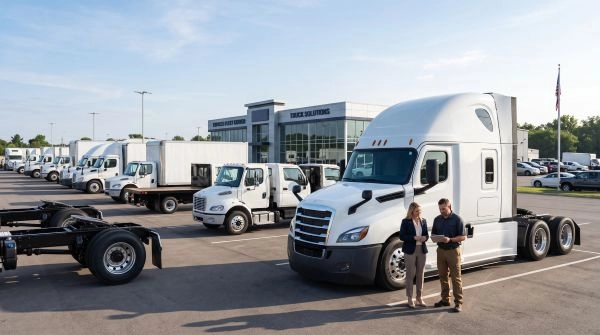
Partnering with a commercial truck dealership provides organization to your lead acquisition and management. It can give you a transparent pipeline from initial interest to a closed and signed deal and lifelong fleet care.
A successful dealership relationship begins with the right inventory. Having access to a broad inventory of vehicles counts when your customers go from small businesses that require one light truck to fleets that require multiple heavy-duty units. A comprehensive commercial truck lot will include box trucks, flatbeds, refrigerated units, chassis cabs, and tractor units across various GVMs and body lengths. That mix simplifies pairing each lead with a truck that suits their payload, route length, and fuel type needs, rather than shoehorning them into whatever happens to be in inventory. Nearly all dealers today have online sites where you can shop stock by body, engine, wheelbase, or price all in one place, accelerating your early lead work and pre-qualifying.
Sales support from a dedicated team can convert even more of those leads into actual deals. A dealership that lives and breathes commercial trucks can talk buyers through legal load limits, upfitting options, and operational cost trade-offs in layman’s terms. They can manage financing and assist with all of the associated paperwork, from credit checks to registration, so your purchasers don’t bog down on admin. If a customer wants to trade in older units, that same team can provide fair market values and integrate those numbers into a transparent offer that often accelerates and de-stresses the purchase decision.
The best partnerships keep it all under one roof. One contact for sales, service and support is time efficient when leads have follow-up questions or need assistance post-delivery. Most dealerships operate a service center of their own, which means the conditions of this partnership can encompass scheduled maintenance, repairs, and even uptime guarantees. Buyers can book a test drive or a full consult, online or on-site, then come back to the same advisor for service plans or replacements. This consistent, long-term arrangement keeps your commercial truck leads satisfied, informed, and more likely to return.
Conclusion
To attract quality commercial truck leads, dealers require more than a large ad budget. They require defined action, precise information and rigorous follow up. Buyers drive fast. They verify specs on an iPhone, chat up a fleet boss and compare bids in just one short week.
Dealers who monitor every step, rate every lead and vet every form close more deals. They waste less time on bogus names and old email lists. They divert those minutes to actual purchasers looking for trucks on the lot today.
Looking for more real leads and less dead ends? Take a hard look at your process today, select one gap and correct that first. Then grow from there.
Frequently Asked Questions
What are commercial truck leads?
Commercial truck leads are the contact information of individuals or businesses that are interested in purchasing or leasing work trucks. These leads, whether they’re from website forms, phone calls, live chat, or in-person visits, represent actual commercial vehicle and fleet solution demand.
How can I attract more commercial truck leads online?
You generate more leads by making your site search-optimized, featuring transparent inventory information, and incorporating compelling calls to action. Useful content, such as buyer guides and financing tips, establishes trust. Quick response and easy contact forms drive serious commercial buyer inquiries.
Why is segmenting commercial truck buyers important?
Segmentation allows you to align offers to each buyer’s unique needs. Small business owners, big fleets, and owner operators all have different budgets and different timelines. By customizing messaging, inventory, and financing options for each segment, you enhance lead quality and close more deals.
How do I convert high-intent commercial truck inquiries?
Quickly respond with concise, detailed information. Validate use case, budget, and timeline. Share matching truck choices, upfront prices, and financing routes. Provide test drives or demos. Eliminating friction and answering questions with authority transforms high-intent questions into signed deals more quickly.
What is lead verification for commercial truck buyers?
Lead verification makes sure that the inquiry is legitimate and qualified. It can consist of verifying contact information, company information, purchase authority, and timing. Trustworthy verification screens spam and low-grade leads, so your salesforce spends time with the buyers who have the best chance to convert.
How does a dealership partner help with commercial truck leads?
A dedicated commercial dealer can offer inventory, finance support and lead processing. They frequently employ sophisticated buyer intent tracking tools. By teaming up with the right dealership, you can enhance lead follow-up, accelerate deals and nurture long-term fleet relationships.
What role does the commercial buyer journey play in lead generation?
Mapping the buyer journey reveals what types of information your customers require at each stage. Early stages need education and later stages need offers and quotes. When your marketing and sales line up with this journey, you capture more leads, build trust, and move prospects seamlessly to buy.