

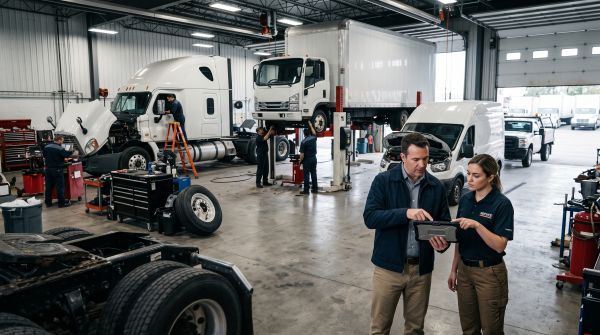
Repair shops win recurring commercial fleet accounts by targeting fleet-manager search terms (not consumer keywords), building website content that speaks directly to fleet buyers — pricing transparency, turnaround guarantees, certifications — and using CRM and automation to manage ongoing fleet relationships. A handful of fleet accounts can fill a shop’s bays more reliably than dozens of one-off consumer repairs.
Most repair shops grow one customer at a time — a walk-in here, a referral there. It works, but it’s slow, and it’s unpredictable. There’s a faster, steadier path: landing recurring commercial fleet accounts. A single fleet contract can replace dozens of one-off jobs with consistent, scheduled work, and fleet clients tend to be far less price-sensitive than individual consumers, since reliability and turnaround time matter more to them than finding the cheapest quote.
Here’s how commercial fleet lead generation actually works, and how to build a strategy that gets your shop in front of the fleet managers who control that recurring work.
Why Fleet Accounts Are the Fastest Way to a Full Shop

Fleet work is fundamentally different from consumer repair work, and it’s worth understanding why before building a strategy around it.
- Recurring instead of one-time. A fleet account isn’t a single repair — it’s ongoing maintenance, inspections, and repairs across multiple vehicles, which means predictable, scheduled bay time.
- Higher average value. Multi-vehicle contracts and preventive maintenance agreements generate significantly more revenue per relationship than a single consumer repair.
- Different buying priorities. Fleet managers are optimizing for uptime and reliability, not the lowest possible price. A shop that can prove fast turnaround and consistent quality wins the account, even at a premium.
This is why a handful of well-managed fleet relationships can do more for your bay utilization than a much larger volume of consumer traffic.
What Fleet Managers Actually Search For
Fleet managers and logistics decision-makers don’t search the way an individual truck owner does. If your content and SEO strategy is built around consumer-style searches like “truck repair near me,” it will largely miss this audience.
What fleet buyers search for instead:
- “Fleet maintenance contract [city]”
- “DOT inspection [city]”
- “commercial fleet repair partner”
- “fleet service agreement [industry/region]”
These are lower-volume but much higher-value searches. Ranking for even one or two of these terms in your market can be worth more than ranking for dozens of generic consumer keywords, because the searcher already knows exactly what they need and is actively evaluating providers.
Beyond keywords, fleet buyers are also evaluating:
- Pricing transparency — clear, published rates for standard services like inspections build trust before the first call.
- Turnaround guarantees — fleet managers need to know how fast a truck gets back on the road.
- Certifications — listing specific technician certifications reassures a buyer who’s vetting you against other providers.
Building Website Content That Speaks to Fleet Buyers
A generic “Contact Us” page isn’t enough to win commercial accounts. Fleet buyers need to see, quickly, that you understand their business — not just how to fix a truck.
- Create a dedicated fleet services page that covers your capacity, turnaround commitments, and relevant certifications, separate from your general repair services page.
- Feature fleet-specific case studies and testimonials. A logistics director evaluating your shop wants to see proof you’ve successfully managed accounts like theirs.
- Give fleet buyers a distinct path to contact you — a “Request a Fleet Quote” or account-setup form that’s separate from the standard consumer booking flow signals that you take commercial relationships seriously.
Using CRM and Automation to Manage Fleet Relationships

Winning a fleet account is only the start — keeping it requires managing a more complex relationship than a single consumer repair.
- Track multiple vehicles per account so nothing gets lost as a fleet grows or changes.
- Automate maintenance reminders tied to each vehicle’s schedule, keeping your shop top-of-mind before a truck goes down rather than after.
- Set up fast-response automation for fleet requests, since a fleet in an emergency situation is evaluating how quickly and reliably you respond — and that first response often decides whether the account stays with you long-term.
A well-run CRM turns a single fleet win into a durable, growing relationship instead of a one-time contract.
Outreach Strategies Beyond SEO
SEO brings in fleet managers who are actively searching, but commercial accounts also respond well to direct approaches that consumer marketing typically doesn’t use.
- Direct outreach to local logistics companies, distributors, and fleet operators in your service area.
- Industry association listings and directories that fleet managers actually consult when vetting repair partners.
- Email nurture sequences built for a longer sales cycle — fleet decisions often involve more stakeholders and more evaluation time than a consumer repair decision.
Combining inbound SEO with proactive outreach gives you two paths into the same pool of high-value accounts.
Proof It Works
A coordinated SEO and Google Business Profile strategy has helped shops significantly grow both visibility and lead volume — including a 50% increase in leads for one Edmonton-area transmission shop through strategic SEO and GMB optimization. The same fundamentals — visibility, trust signals, and a clear path to contact — apply directly to winning fleet accounts.
Ready to Land More Fleet Accounts?
If your shop is ready to move beyond one-off repairs and start building recurring, high-value fleet relationships, get in touch for a free consultation. For the full strategy breakdown, visit the Commercial Fleet Lead Generation page.
Frequently Asked Questions
How do repair shops attract commercial fleet accounts? Repair shops attract fleet accounts by targeting fleet-manager search terms like “fleet maintenance contract” or “DOT inspection,” building website content that shows pricing transparency and turnaround guarantees, and following up with a CRM system built to manage multi-vehicle relationships over time.
Why are fleet accounts more valuable than individual repair customers? Fleet accounts provide recurring, scheduled work across multiple vehicles instead of a single transaction, and fleet managers prioritize reliability and turnaround time over the lowest price. This makes fleet relationships both higher in total value and more predictable for bay utilization than consumer walk-ins.
What should a fleet services page include? A dedicated fleet services page should include your shop’s capacity, turnaround-time commitments, relevant technician certifications, fleet-specific testimonials or case studies, and a distinct way for fleet managers to request a quote or start an account, separate from consumer service booking.
How many fleet accounts does a shop need to stay consistently full? It varies by shop size and vehicle count per fleet, but even 2 to 4 well-managed fleet accounts with regular preventive maintenance schedules can provide enough recurring, predictable work to significantly stabilize bay utilization — often more reliably than a much larger volume of one-off consumer repairs.
How long does it typically take to land a fleet account? Fleet sales cycles are longer than consumer repair decisions, often taking weeks to a few months. Fleet managers usually involve more stakeholders, compare multiple providers, and want proof of reliability before committing, so consistent follow-up and nurture communication matter more than a single outreach attempt.
What makes a fleet manager choose one repair shop over another? Fleet managers prioritize uptime and reliability above price. The deciding factors are usually turnaround-time guarantees, proven track record (through case studies or references), responsiveness to emergency requests, and clear, transparent pricing — not simply who offers the lowest rate.
Can a small or independent shop realistically compete for fleet accounts? Yes. Fleet managers care more about reliability, responsiveness, and proven results than shop size. A smaller shop that can clearly demonstrate fast turnaround, strong reviews, and relevant certifications can win accounts away from larger competitors who are slower to respond or less consistent.
Is cold outreach still effective for winning fleet accounts, or is SEO enough? Both work better together than alone. SEO captures fleet managers who are actively searching, but many fleet decision-makers aren’t searching yet — they’re contacted directly or referred. Combining inbound SEO with proactive outreach to local logistics and fleet operators covers both paths to the same buyers.
What’s the biggest mistake shops make when trying to win fleet accounts? The most common mistake is marketing to fleet managers the same way shops market to individual consumers — leading with price and generic repair messaging instead of reliability, turnaround guarantees, and proof of experience managing multi-vehicle accounts. Fleet buyers are evaluating a business partner, not a single transaction.
How should a shop price services for fleet clients versus individual customers? Fleet pricing is typically structured around volume and contract terms — such as scheduled maintenance agreements or tiered service rates — rather than the per-job pricing used for individual customers. Transparent, published rate structures for standard services help fleet managers evaluate and compare providers more easily.