

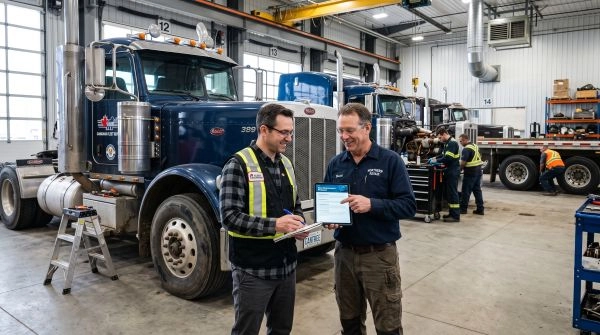
For a heavy-duty repair shop, winning fleet maintenance contracts can create a more predictable source of business while building long-term relationships with commercial operators. Instead of waiting for fleet customers to call when a truck breaks down, a maintenance contract can establish an ongoing service relationship.
But fleet operators do not choose a repair provider based on price alone. They need to know that a shop can handle their equipment, communicate clearly, respond when problems arise, and help keep vehicles productive.
So, how do you win fleet maintenance contracts?
The process starts with understanding what fleet managers look for, identifying qualified prospects, creating a professional proposal, and demonstrating that your shop can provide dependable service.
What Are Fleet Maintenance Contracts?
A fleet maintenance contract is an ongoing agreement between a commercial fleet and a service provider. The agreement defines the types of maintenance and repair services the provider will perform, how services will be requested, expected response times, pricing or billing arrangements, and other responsibilities.
Depending on the fleet, a contract may cover services such as:
- Preventive maintenance
- Inspections
- Brake service
- Trailer repairs
- Electrical diagnostics
- Cooling system repairs
- Suspension repairs
- Engine-related repairs
- Emergency or mobile repair
- Scheduled maintenance
- Parts replacement
- Fleet inspections
The exact scope depends on the customer’s equipment, operating schedule, location, and maintenance requirements.
For a repair shop, the goal is not simply to secure a contract. The goal is to build a service relationship that helps the fleet reduce downtime and maintain reliable equipment.
Why Fleet Operators Use Maintenance Contracts
Commercial fleets have a different set of priorities than individual vehicle owners.
When a truck is unavailable, the impact can extend beyond the repair bill. A breakdown can delay deliveries, disrupt schedules, affect drivers, and create additional operating costs.
A maintenance contract can give fleet operators a more organized way to manage repairs and preventive maintenance.
Common benefits include:
More Predictable Maintenance
Regular maintenance can help identify developing problems before they become major repairs.
Easier Service Coordination
Instead of finding a repair provider every time a problem occurs, fleet managers have an established service relationship.
Better Communication
A defined maintenance process can establish who should be contacted, how work is authorized, and how updates are provided.
Reduced Downtime
Quick access to qualified repair services can help get equipment back into operation sooner when maintenance or repairs are required.
These are the business outcomes that your proposal should focus on—not simply a list of services.
Step 1: Determine Which Fleets You Can Serve

Before sending proposals, determine which types of fleets are a good fit for your shop.
Potential customers may include:
- Trucking companies
- Construction fleets
- Delivery companies
- Transportation companies
- Municipal fleets
- Equipment operators
- Service contractors
- Agricultural businesses
- Regional hauling companies
- Trailer fleets
For shops that need a structured approach to finding and attracting qualified commercial prospects, commercial fleet lead generation can be a useful resource when developing a fleet-focused marketing strategy.
Consider your current capabilities when qualifying prospects.
Ask yourself:
- What truck types can we service?
- What trailer types can we service?
- What geographic area can we cover?
- Do we offer mobile repair?
- What maintenance services can we perform?
- Can we accommodate scheduled fleet maintenance?
- What are our typical response times?
- Can we support after-hours emergencies?
- How quickly can we source common parts?
- How much fleet volume can we realistically handle?
The goal is to pursue contracts that match your actual capacity.
Overpromising during the sales process can create problems later, particularly when a fleet expects response times or services that your shop cannot consistently provide.
Step 2: Understand Fleet Qualification Criteria
Fleet managers typically need to evaluate whether a repair provider can meet their operational requirements.
Your qualification criteria may include:
Experience
Demonstrate experience working with commercial trucks, trailers, and heavy-duty equipment.
Service Capability
Clearly explain the maintenance and repair services your shop provides.
Response Time
Fleet operators need to understand how quickly you can respond to scheduled and emergency service requests.
Geographic Coverage
Clearly define the locations your technicians can serve.
Parts Availability
Explain your process for sourcing replacement components and managing parts-related delays.
Communication
Describe how customers receive repair updates, estimates, approvals, and completion notifications.
Documentation
Fleet customers may need invoices, inspection records, maintenance histories, and other service documentation.
Capacity
Be realistic about the number of fleet vehicles you can support without compromising service quality.
These criteria should be addressed directly in your proposal rather than forcing the fleet manager to search for the information.
Step 3: Find the Right Fleet Decision-Makers
A great proposal will not help if it never reaches the person responsible for maintenance decisions.
Depending on the company, the relevant contact could be:
- Fleet manager
- Maintenance manager
- Operations manager
- Transportation manager
- Service manager
- Owner
- Purchasing manager
- General manager
Research the company before reaching out.
Look for information about its fleet size, operating area, equipment type, and service requirements. This gives you an opportunity to make your initial communication more relevant.
Instead of sending a generic message that says, “We provide truck repair,” explain how your service could address a specific fleet maintenance need.
Step 4: Build a Fleet Maintenance Outreach Strategy
Cold outreach works better when it is specific and useful.
Your outreach can include:
- Phone calls
- Website contact forms
- Local networking
- Industry events
- Existing customer referrals
- Follow-up communications
Keep the first message concise.
Explain:
- Who you are
- What type of fleet service you provide
- The geographic area you cover
- Why you are contacting them
- What you would like to discuss
Then provide an easy next step, such as a short introductory call.
Do not try to explain your entire service offering in the first email. The purpose of the initial outreach is to start a conversation.
For shops managing repeated outreach and follow-ups, marketing automation can help organize recurring marketing workflows and follow-up activities so prospects do not get overlooked.
Step 5: Create a Professional Fleet Maintenance Proposal

Once a fleet operator is interested, your proposal should make it easy for them to understand exactly what you provide.
A strong proposal can include:
1. Executive Summary
Briefly explain your understanding of the fleet’s needs and how your service can support its operations.
2. Company Overview
Provide a concise overview of your repair shop, service capabilities, and relevant experience.
3. Scope of Services
List exactly what is included.
For example:
- Preventive maintenance
- Inspections
- Heavy-duty truck repair
- Trailer repair
- Diagnostics
- Brake service
- Electrical repair
- Cooling system service
- Mobile repair
4. Response-Time Expectations
Clearly explain how service requests are handled.
Include separate expectations for:
- Scheduled maintenance
- Routine repairs
- Urgent repairs
- Emergency roadside or mobile service
5. Communication Process
Explain how customers can request service and how they will receive updates.
6. Pricing and Billing
Clearly outline your labor rates, parts policies, diagnostic charges, payment terms, or other applicable costs.
7. Service Documentation
Explain what records the fleet will receive after maintenance or repair work.
8. Agreement Terms
Include contract duration, renewal terms, cancellation provisions, authorization procedures, and other important conditions.
A proposal is also a content asset that represents your business. Keeping your website and supporting marketing materials organized through content management can help maintain consistent service information and messaging across your digital presence.
Response Time Matters
For commercial fleets, response time can be just as important as repair capability.
A fleet manager may ask:
- How quickly can you respond?
- Can you provide mobile service?
- What happens after normal business hours?
- How quickly can diagnostics begin?
- How are emergency requests prioritized?
- How will we receive updates?
Do not promise unrealistic response times simply to win the contract.
Instead, establish clear service levels that your team can consistently meet.
For example, a proposal could distinguish between routine maintenance appointments and emergency service requests.
Clear expectations protect both the repair shop and the fleet customer.
How to Make Your Proposal More Valuable
A proposal should answer the question:
“Why should this fleet trust us with its equipment?”
Focus on operational value.
Instead of simply writing:
“Full-service truck repair.”
Explain what that means for the fleet:
“Scheduled maintenance, inspections, diagnostics, and heavy-duty repairs designed to help fleet operators identify problems early and reduce unnecessary equipment downtime.”
The second statement connects the service to the customer’s business objective.
Fleet Maintenance Contract Proposal Template
Use the following template as a starting point for your own proposal.
Fleet Maintenance Service Proposal
Prepared for: [Fleet Company Name]
Prepared by: [Repair Shop Name]
Date: [Date]
1. Introduction
Thank you for the opportunity to provide fleet maintenance and repair services for [Fleet Company Name].
Our goal is to provide dependable maintenance and repair support that helps keep your commercial vehicles operating safely and efficiently.
2. Services Included
Our proposed services include:
- [Service]
- [Service]
- [Service]
- [Service]
- [Service]
3. Service Area
We provide service in:
[Service Area]
4. Response Times
Routine Maintenance: [Response/appointment expectation]
Standard Repairs: [Response expectation]
Emergency Service: [Response expectation]
5. Communication
Customers will receive:
- Service updates
- Repair estimates
- Approval requests
- Completion notifications
- Maintenance documentation
6. Pricing
Labor: [Rate]
Parts: [Pricing structure]
Diagnostics: [Pricing structure]
Additional charges: [Details]
7. Billing Terms
Payment terms: [Terms]
Invoices will include: [Details]
8. Contract Terms
Contract length: [Term]
Renewal: [Terms]
Cancellation: [Terms]
9. Contact Information
[Repair Shop Name]
[Phone]
[Email]
[Website]
10. Acceptance
Authorized representative: __________________
Signature: __________________
Date: __________________
This template should be customized for each fleet rather than sent as a generic document. A personalized proposal demonstrates that you understand the customer’s operation and requirements.
Follow Up After Sending the Proposal
Do not assume that no response means no interest.
Fleet managers are often busy dealing with schedules, drivers, equipment, and operational issues.
A simple follow-up sequence can include:
Initial proposal: Send the proposal with a concise summary.
First follow-up: Ask whether they had an opportunity to review it.
Second follow-up: Address any questions about services, response times, or pricing.
Final follow-up: Leave the door open for a future conversation.
The objective is to remain professional without becoming overly persistent.
Measure Your Fleet Contract Sales Process
Once you begin outreach, track your results.
Useful metrics include:
- Number of fleet prospects contacted
- Response rate
- Discovery calls booked
- Proposals sent
- Proposals accepted
- Average contract value
- Follow-up conversion rate
- Average sales cycle
- Customer retention
- Revenue generated from fleet accounts
Tracking these numbers can help you identify where prospects are dropping out of the process.
For example, if many prospects respond to outreach but few request proposals, your discovery process may need improvement. If proposals are frequently sent but rarely accepted, review your pricing, service scope, response commitments, and proposal presentation.
Build the Relationship After Winning the Contract
 Winning the contract is only the beginning.
Strong fleet relationships depend on consistent service.
Keep communication organized. Document completed work. Follow up on recurring maintenance needs. Be transparent when unexpected repairs are discovered.
Most importantly, avoid creating surprises for the fleet manager whenever possible.
A repair shop that consistently communicates and delivers on its commitments can become an important part of a fleet’s maintenance process.
How Heavy Duty Advertising Can Support Commercial Fleets
Choosing a fleet repair partner requires more than comparing a list of services. Fleet operators need a repair provider that understands the importance of equipment availability, communication, and timely heavy-duty service.
Heavy Duty Advertising provides heavy-duty truck and trailer repair services for commercial operators, including mobile service support.
If your fleet needs a dependable repair and maintenance partner, contact Heavy Duty Advertising to discuss your fleet’s service requirements and determine how its heavy-duty repair services can fit into your maintenance strategy.
Final Thoughts
Winning fleet maintenance contracts requires a combination of targeted outreach, strong proposals, realistic response commitments, and consistent service.
Start by identifying the fleets your shop can realistically support. Learn what their maintenance teams need, communicate your capabilities clearly, and create proposals that focus on operational value rather than simply listing services.
A professional proposal can open the door—but dependable service and communication are what help turn a contract into a long-term fleet relationship.
Frequently Asked Questions
1. What are fleet maintenance contracts?
Fleet maintenance contracts are ongoing service arrangements between a repair provider and a business operating multiple vehicles or pieces of equipment. Depending on the agreement, services may include scheduled maintenance, inspections, repairs, emergency support, or other fleet-related services.
2. What do fleet managers look for in a repair provider?
Fleet managers may evaluate factors such as service capabilities, response times, service coverage, communication, scheduling, pricing, documentation, and the provider’s ability to handle the fleet’s maintenance requirements consistently.
3. How can a repair shop find fleet maintenance opportunities?
Repair shops can identify potential fleet customers through local business research, commercial operators, transportation companies, industry networking, referrals, direct outreach, and relationships with businesses that operate trucks and trailers.
4. What should a fleet maintenance proposal include?
A proposal can outline the services offered, maintenance coverage, response procedures, service areas, scheduling process, communication expectations, pricing structure, documentation, and any other terms relevant to the fleet’s requirements.
5. Why is response time important when pursuing fleet contracts?
Commercial fleets depend on their vehicles to remain operational. A repair provider that clearly communicates how service requests are handled, including urgent or unexpected repair needs, can give fleet managers a better understanding of what to expect when problems occur.
6. Should repair shops customize proposals for each fleet?
Yes. A proposal should reflect the customer’s fleet size, vehicle types, service requirements, locations, maintenance needs, and operating conditions when that information is available. A customized proposal can make it easier for the fleet manager to evaluate whether the services match their requirements.
7. How should a repair shop follow up after submitting a fleet proposal?
Follow-up should be organized and consistent. A repair shop can confirm that the proposal was received, answer questions, provide additional information when requested, and maintain communication without relying on a single follow-up attempt.
8. What services can be included in a fleet maintenance agreement?
Depending on the repair shop’s capabilities and the fleet’s requirements, an agreement may include preventive maintenance, inspections, mechanical repairs, trailer service, diagnostics, scheduled service, mobile repair, or emergency support.
9. How can a repair shop measure its fleet contract sales process?
Useful measurements can include the number of prospects contacted, responses received, meetings or consultations, proposals submitted, follow-ups completed, contracts won, contract value, and the time required to move opportunities through the sales process.
10. How can a repair shop build long-term fleet relationships?
Consistent communication, reliable service, clear documentation, responsive support, and understanding the customer’s operational needs can help maintain a professional fleet relationship. After winning a contract, the focus should shift from simply acquiring the account to consistently delivering the agreed service.