

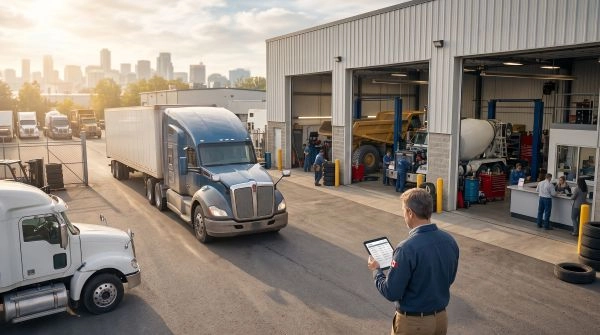
Running a heavy-duty repair shop is about more than keeping trucks, trailers, and equipment on the road. You also need a steady pipeline of customers to keep your technicians productive and your repair bays full.
Many heavy-duty repair shops have the experience, equipment, and skilled technicians to handle complex jobs but still struggle to generate consistent leads. Depending entirely on referrals, repeat customers, or word-of-mouth can create unpredictable slow periods.
The good news is that generating more heavy-duty repair leads does not require relying on a single marketing channel. A strategic combination of local SEO, Google Business Profile optimization, paid advertising, useful content, reputation management, and lead follow-up can put your shop in front of more customers when they are actively looking for repair services.
Here are seven proven ways to generate more qualified heavy-duty repair leads and turn online searches into real repair opportunities.
1. Dominate Local Search for Heavy-Duty Repair Services

When a truck breaks down or a fleet manager needs a reliable repair facility, they usually search online for a nearby provider.
Searches such as:
- heavy-duty truck repair near me
- diesel repair shop near me
- commercial truck repair
- semi-truck repair near me
- fleet truck repair
- heavy-duty mechanic near me
show strong local and commercial intent.
If your repair shop does not appear prominently when customers perform these searches, you may be losing potential jobs to competitors.
This is where local SEO becomes essential.
Your website should clearly communicate the services you provide, the vehicles and equipment you work on, and the geographic areas you serve. Create dedicated service pages for important services rather than placing every service on a single generic page.
For example, a heavy-duty repair shop might have individual pages for:
- Diesel engine repair
- Semi-truck repair
- Commercial truck repair
- Fleet maintenance
- Brake repair
- Transmission repair
- Preventive maintenance
- Mobile truck repair
Optimize each page around the search intent of the customer rather than simply repeating keywords.
Your goal is not just to rank higher. It is to make it easy for someone searching for a repair solution to understand why your shop is the right choice.
2. Optimize Your Google Business Profile
Your Google Business Profile can be one of the most valuable sources of local heavy-duty repair leads.
When someone searches for a repair shop, Google may display local businesses in the map results before traditional organic listings. A well-optimized profile can therefore put your shop in front of customers who are ready to call, request directions, visit your website, or ask for more information.
Make sure your profile contains accurate information about:
- Business name
- Address and service area
- Phone number
- Website
- Business hours
- Primary and secondary categories
- Services
- Business description
But optimization should not stop there.
Regularly add photos of your technicians, facility, service vehicles, equipment, completed repair work, and other legitimate business activities. These images help potential customers understand that your shop is equipped to handle heavy-duty work.
You should also publish Google Business Profile updates that highlight services, maintenance tips, seasonal services, special offers, and helpful information for fleet operators.
Most importantly, make review generation part of your customer process.
A steady stream of genuine reviews can improve your shop’s credibility and help potential customers feel more confident choosing you over another repair facility.
3. Build a Website That Converts Traffic Into Leads
Getting visitors to your website is only half the job.
If your website attracts traffic but visitors cannot quickly figure out how to contact your shop, you may be wasting valuable marketing opportunities.
A heavy-duty repair website should make the next step obvious.
Place prominent calls to action throughout the site, such as:
Call Now for Heavy-Duty Repair
Request a Repair Estimate
Schedule Service
Contact Our Repair Team
Your phone number should be easy to find, particularly on mobile devices.
Service pages should also answer the questions potential customers have before contacting a repair shop:
- What services do you provide?
- What types of trucks or equipment do you repair?
- Where do you provide service?
- Do you offer emergency or mobile repair?
- Do you work with commercial fleets?
- What makes your shop different?
- How can customers request service?
Include trust signals throughout the website as well. Customer reviews, certifications, years of experience, photos of your facility, service-area information, and examples of completed work can help reduce hesitation.
Think of your website as your sales representative working around the clock. Its job is not simply to provide information. Its job is to move qualified visitors toward contacting your business.
4. Create Content Around Problems Your Customers Are Searching For
Blogging can generate leads when it is built around actual customer questions and service-related search intent.
Instead of publishing generic articles that have little connection to your services, create content that answers questions heavy-duty vehicle owners, fleet managers, and commercial drivers are already asking.
For example:
- How Much Does Heavy-Duty Truck Repair Cost?
- 7 Signs Your Diesel Engine Needs Professional Repair
- How Often Should Commercial Trucks Be Serviced?
- What to Do When a Semi-Truck Breaks Down
- Preventive Maintenance Checklist for Commercial Fleets
- Common Causes of Heavy-Duty Truck Brake Problems
- How to Choose a Heavy-Duty Repair Shop for Your Fleet
These topics can attract people earlier in the buying journey.
Someone searching for symptoms of an engine problem may not be ready to call immediately. But if your article provides useful information and clearly explains when professional repair is necessary, you have an opportunity to turn that visitor into a future customer.
Every article should naturally connect the information to your services.
For example, an article about diesel engine warning signs could include a call to action encouraging readers to contact your shop for professional diagnosis and repair.
That turns content marketing into a lead-generation asset rather than simply a traffic-generation strategy.
5. Use Google Ads to Capture High-Intent Searches
SEO can provide long-term visibility, but it takes time to build rankings.
Paid search advertising can help heavy-duty repair shops get in front of potential customers more quickly.
The key is to focus your advertising budget on high-intent searches.
Someone searching for:
“heavy-duty truck repair near me”
is generally much more valuable than someone searching for:
“truck maintenance tips.”
The first person may need a repair provider now. The second person is primarily looking for information.
Build campaigns around services that generate profitable jobs for your shop.
Depending on your business, these could include:
- Heavy-duty truck repair
- Diesel repair
- Commercial truck repair
- Fleet repair
- Mobile truck repair
- Emergency truck repair
- Trailer repair
Your ads should lead visitors to relevant service pages instead of always sending everyone to your homepage.
For example, an advertisement for mobile truck repair should direct users to a mobile repair page that explains your service area, availability, services, and contact options.
Track phone calls, form submissions, and other meaningful conversions so you can determine which campaigns are actually producing customers.
6. Turn Every Satisfied Customer Into a Marketing Opportunity
One of the most overlooked sources of heavy-duty repair leads is the customer you have already served.
A customer who had a positive experience with your shop can become a source of repeat business, referrals, reviews, and commercial opportunities.
After completing a repair, create a simple follow-up process.
Ask the customer whether everything is working properly. Then, when appropriate, request an honest review.
You can also encourage referrals without making the process complicated.
For example, a satisfied customer who operates several trucks may know other fleet owners, owner-operators, or contractors who need reliable repair services.
Your existing customer base can also provide valuable information about which services are in demand.
If you notice that customers repeatedly ask about preventive maintenance, fleet inspections, mobile repairs, or specific diesel services, those questions can become future website pages, blog articles, FAQs, and marketing campaigns.
Your customers are not just transactions. They are a source of insight into what your market actually needs.
7. Follow Up With Every Qualified Lead

Generating leads is important, but what happens after someone contacts your shop can determine whether that lead becomes revenue.
A potential customer may call while your service advisor is busy. Someone may submit a website form after business hours. A fleet manager may request information but need several days before making a decision.
If those leads are not followed up, another repair shop may win the business.
Create a consistent lead follow-up process.
For every qualified inquiry, record information such as:
- Customer name
- Company or fleet name
- Phone number
- Vehicle or equipment type
- Required service
- Location
- Preferred service date
- Lead source
- Follow-up status
A customer relationship management system can help organize this information and automate appropriate follow-up reminders.
For example, someone who requests information about fleet maintenance could receive a timely follow-up asking whether they would like to discuss their fleet’s needs.
The goal is not to bombard potential customers with messages. It is to make sure legitimate inquiries do not disappear simply because your team became busy.
Don’t Just Generate More Leads—Generate Better Leads
More leads are not always better.
A repair shop could receive dozens of inquiries every month and still struggle to grow if those inquiries are poorly qualified.
The goal should be to attract customers who need the services your shop is equipped and profitable to provide.
This means your marketing should clearly communicate:
What you repair.
Who you serve.
Where you operate.
What services you offer.
Why customers should choose your shop.
For example, if your shop specializes in heavy-duty diesel repair for commercial fleets, your website and advertising should make that specialization obvious.
Clear positioning helps filter out irrelevant inquiries while attracting customers who are a better fit.
Track the Numbers That Actually Matter
Marketing decisions become much easier when you know which activities are generating business.
Instead of focusing only on website traffic or social media engagement, track metrics that connect marketing activity to revenue opportunities.
Important metrics can include:
- Website leads
- Phone calls
- Quote requests
- Service appointments
- Qualified leads
- Cost per lead
- Lead-to-customer conversion rate
- Google Business Profile interactions
- Organic search traffic
- Paid advertising conversions
- Fleet account inquiries
For example, 1,000 website visitors may look impressive, but 20 qualified repair inquiries can be far more valuable to your business.
The objective is to understand which marketing channels consistently generate qualified opportunities and then invest more strategically in those channels.
Build a Consistent Lead-Generation System
A heavy-duty repair shop should not have to depend on luck to keep its bays busy.
A strong lead-generation strategy combines multiple channels that work together.
Local SEO helps your shop appear when customers search for repair services.
Google Business Profile optimization increases local visibility and builds trust.
Helpful content attracts people researching repair problems.
Paid advertising captures high-intent searches.
Reviews strengthen your reputation.
A conversion-focused website turns visitors into inquiries.
Lead follow-up helps prevent opportunities from being lost.
Together, these strategies create a system that can generate a more consistent flow of potential customers.
The most successful approach is not necessarily to do everything at once. Start by identifying where your biggest gaps are.
If your shop has strong services but poor online visibility, focus on local SEO and Google Business Profile optimization.
If your website receives traffic but generates few inquiries, improve your service pages and calls to action.
If you receive inquiries but lose potential customers during follow-up, improve your lead management process.
If you want more predictable commercial business, develop a strategy specifically designed to attract fleet accounts.
Ready to Put More Repair Leads in Your Pipeline?
Having skilled technicians and a well-equipped repair facility is only part of building a successful heavy-duty repair business. You also need a reliable way to get your shop in front of customers who need your services.
The best lead-generation strategies combine visibility, trust, conversion, and follow-up.
Start by making it easier for local customers to find your shop. Optimize your Google Business Profile, strengthen your service pages, create useful content, build your review profile, and make contacting your business simple.
Then measure what happens after the lead arrives.
Which channels generate calls? Which campaigns produce qualified customers? Which services attract the most profitable opportunities? Which leads become repeat customers or fleet accounts?
When you treat marketing as a measurable lead-generation system rather than a collection of disconnected tactics, you can make smarter decisions about where to invest your time and budget.
For heavy-duty repair shops ready to move beyond unpredictable referrals and build a stronger pipeline of qualified opportunities, strategic heavy-duty repair marketing can help turn online visibility into real business growth.
Frequently Asked Questions
1. How can a heavy-duty repair shop generate more qualified leads?
Heavy-duty repair shops can generate qualified leads by combining local SEO, Google Business Profile optimization, paid advertising, useful content, reputation management, a conversion-focused website, and consistent lead follow-up.
2. Why is local SEO important for heavy-duty repair shops?
Local SEO helps repair shops appear when nearby customers, truck owners, fleet managers, and commercial operators search for services such as heavy-duty truck repair, diesel repair, fleet repair, and mobile truck repair.
3. How can Google Business Profile help generate heavy-duty repair leads?
An optimized Google Business Profile can increase local visibility and make it easier for potential customers to call, request directions, visit the website, or learn about the shop. Accurate business information, service listings, photos, updates, and genuine customer reviews can strengthen the profile.
4. What should a heavy-duty repair shop website include to generate leads?
A lead-generating website should clearly explain the shop’s services, service area, vehicle and equipment capabilities, emergency or mobile repair options, fleet services, and competitive advantages. Prominent calls to action such as “Request a Repair Estimate” and “Schedule Service” should make contacting the shop easy.
5. Can blog content generate heavy-duty repair leads?
Yes. Content can attract potential customers searching for answers about repair problems, maintenance, costs, and commercial truck issues. Articles should address real customer questions and naturally connect readers to the shop’s relevant services.
6. Should heavy-duty repair shops use Google Ads?
Google Ads can help shops reach high-intent customers more quickly while organic SEO rankings are developing. Campaigns should focus on profitable services such as heavy-duty truck repair, diesel repair, fleet repair, mobile repair, emergency repair, and trailer repair.
7. How can a repair shop turn satisfied customers into new leads?
Satisfied customers can generate repeat business, referrals, reviews, and commercial opportunities. Shops can follow up after repairs, request honest reviews, encourage referrals, and use recurring customer questions to identify new service pages, FAQs, and content opportunities.
8. Why is lead follow-up important for heavy-duty repair shops?
A qualified lead can be lost if the shop does not respond quickly or consistently. Recording information such as the customer’s contact details, vehicle type, required service, location, lead source, and follow-up status helps the team manage inquiries and prevent opportunities from disappearing.
9. What marketing metrics should a heavy-duty repair shop track?
Important metrics include website leads, phone calls, quote requests, appointments, qualified leads, cost per lead, lead-to-customer conversion rate, Google Business Profile interactions, organic traffic, paid advertising conversions, and fleet account inquiries.
10. How can a repair shop generate better leads instead of simply more leads?
The goal is to attract customers who need the services the shop is equipped and profitable to provide. Marketing should clearly communicate what the shop repairs, who it serves, where it operates, what services it offers, and why customers should choose it.