

- Key Takeaways
- The Online Visibility Problem
- Critical Repair Shop SEO Mistakes
- Fortify Your Digital Garage
- The Trust Signal Factor
- Beyond Basic SEO Tactics
- Measure What Matters
- Conclusion
- Frequently Asked Questions
- What is repair shop SEO and why does it matter?
- How can I improve my repair shop’s online visibility quickly?
- What are the most common SEO mistakes repair shops make?
- How do customer reviews impact my repair shop SEO?
- Which SEO tactics work best for local repair shops?
- How do I know if my repair shop SEO is working?
- Should I hire an SEO specialist for my repair shop?
Key Takeaways
- Too many repair shops have weak local Search Engine Optimization, unoptimized websites and incomplete Google Business Profiles that they get fewer calls, bookings and walk-ins. Optimizing these fundamentals makes it easier for local motorists to discover and select your shop on the web.
- Typical repair shop SEO errors are abandoned profiles, inconsistent contact information, sluggish legacy sites, absent keywords, overlooked reviews, and trite content. Repairing them with a targeted repair shop SEO campaign assists your shop in ranking better on Google Search and Google Maps.
- An effective local SEO platform consists of a website, clean listings, and a full Google Business Profile with authentic photos and up-to-date business information. Frequent updates to hours, services, and content keep you relevant and trusted by both search engines and customers.
- Focused keyword research and quality content that answers actual customer questions increase your likelihood of showing for queries like ‘auto repair near me’ or ‘diesel engine repair’. Establish your shop as an expert with service pages, blog posts, and FAQs that bring in the right traffic.
- Trust signals like reviews, professional replies, certification, real shop images and even customer testimonials play a significant role in rankings and customer decisions. Turn review generation, review management and social proof into a regular part of your marketing so new visitors feel good about selecting your shop.
- Advanced strategies including schema markup, local backlinks, and continuous tracking with Google Analytics and Google Search Console keep you ahead of the competition. Review your SEO metrics and adapt your strategy so your repair shop keeps gaining visibility, leads, and long-term ROI.
What is repair shop SEO? Repair shop SEO is the practice of getting auto, phone, and appliance repair shops to show up higher in search results when people need local fixes. A lot of shops still get by on word of mouth, but search is huge these days when someone’s car breaks down or their phone screen cracks. Good repair shop SEO typically includes local keywords, well-defined service pages, quick site speed, and correct map listings. Positive reviews, consistent contact information, and uncluttered design provide trust signals to search engines. To get more organized, owners and managers will often divide repair shop SEO into on-page work, local search, and basic technical checks. The following sections walk through each component in clear steps that suit actual repair shops.
The Online Visibility Problem
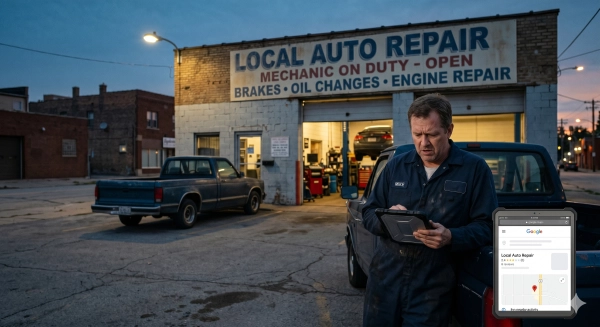
One of the most common issues is weak or inconsistent business data. The shop name, address, phone number, and hours may vary between your site, GBP, and directory listings. Search engines consider this risk, so they provide greater visibility to stores with neat, uniform profiles. Omitting important information such as service types, service areas, and authentic photos damages map rankings. When a driver searches for ‘brake repair near me’ or ‘diesel truck repair [city],’ an engine selects the listings it trusts, not necessarily the ones with the best true talent.
Bad local SEO on the website adds insult to injury. Too many repair shop sites load slow, look terrible on mobile and bury their important service pages. They bypass obvious terms such as “AC repair,” “fleet maintenance” or “transmission rebuild” in titles and headlines. As a consequence, they don’t appear when local car owners look for assistance. It’s a huge hole since 97% of consumers go online for local businesses, and appearing for those repair terms creates brand recognition even if the person’s not booking that day.
A robust local SEO strategy causes the shop to show up again and again for appropriate local searches, which creates trust and keeps the brand top-of-mind. With time, this consistent visibility becomes a stream of high-intent leads, not fires. They check out reviews and compare, and first impressions count, particularly on Google Maps. Through a profile and site well-optimized, you can cause qualified traffic and more service inquiries from nearby customers, but results do not come instantly. For tough niches, first page placement can require six to twelve months, but lots of shops experience good progress within three to six months when SEO is done properly.
Critical Repair Shop SEO Mistakes
Many repair shops repeat the same SEO errors that quietly drain traffic, calls, and booked jobs:
- Half‑finished Google Business Profiles
- Inconsistent name, address, and phone data across directories
- Slow, outdated websites with weak internal links
- Generic URLs and missing service pages
- Poor keyword planning and thin content
- Ignored reviews and weak review replies
- Oversized images and too many third‑party scripts
- Overlong meta descriptions and “set‑and‑forget” SEO tactics
They decrease local map rankings, reduce visibility for “auto repair near me,” and surrender search traffic to other neighboring auto repair shops that take a more intentional approach to SEO. A straightforward, niche-focused SEO strategy, checked regularly, keeps your shop in front of local motorists for the long haul.
1. Neglected Profile
Half‑done Google Business Profile does not show in the local pack when someone searches “brake repair near me” within 5 km of your shop! Missing categories, weak descriptions, no photos or old hours scream low relevance and low trust to both search engines and users, so calls drift to other shops with complete and active profiles.
Claim and verify the listing, then fill every field: business name exactly as used on your sign and website, precise address, service areas, direct phone number, main and secondary categories, for example, “Auto repair shop,” “Transmission shop,” “Diesel engine repair service,” short business description, and key services. Upload crisp shots of the outside, inside, waiting room, and actual repairs, not stock photos.
Keep hours, phone, and services current during holidays, staff turnover, or new services like digital vehicle inspections. Get your posts in on seasonal checks, tire rotations, fleet deals, or safety checks and list products or services to showcase typical jobs with pricing in your primary currency.
2. Inconsistent Data
If your shop name, address, or phone varies between your website, Google Business Profile, Facebook, local directories, and map apps, search engines struggle to trust which listing is correct. That confusion can drive your repair shop below competitors with reliable data in local results and map packs.
Start with a full audit: list every place your business appears online and check NAP data line by line. Repair any variation in spelling, unit number formatting or phone number formatting so all listings match your site precisely. Maintain a master sheet of these listings and review it a few times per year or after any move or rebrand to keep location signals clean.
3. Weak Website
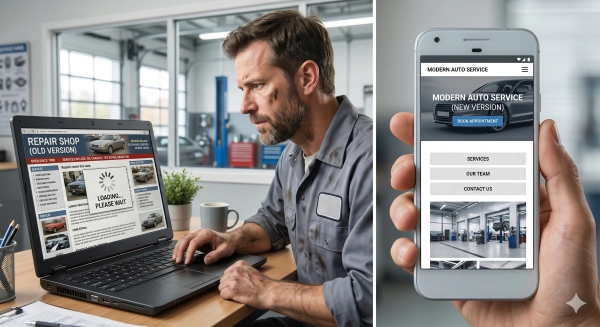
An old, cluttered site with slow pages from huge uncompressed images, dozens of third-party scripts, and generic URLs like /page1 not only frustrates visitors, it makes it hard for search engines to crawl, index, and rank your content. Thin internal linking between pages adds another layer of friction since search engines receive less context regarding how your services connect to one another.
Awesome, invest in a really simple mobile-first layout with clear menus, short contact forms, and fast load times. Critical Repair Shop SEO Mistakes. Optimize website speed by compressing images, trimming heavy scripts like multiple chat widgets or tracking tags, and using secure HTTPS on all pages. Use keyword-rich, readable URLs, such as /brake-repair/ instead of /services3, and add structured data for local business and services where you can.
Develop individual, expertly authored pages for key services, such as brake repair, transmission maintenance, diesel engine repair, fleet maintenance, and digital vehicle inspections. Interlink these pages with your homepage. Check indexing regularly in search tools and fix crawl errors early so new content can rank faster.
4. Missing Keywords
About half of all shops guess keywords and skip actual research and miss strong phrases like “auto repair near me,” “hybrid car repair,” “diesel engine repair,” or “fleet maintenance service in [city].” That guesswork results in pages that seem fine to humans but fail to correspond with sufficient real searches to generate consistent organic traffic.
Leverage a simple keyword tool and your own service history to create a table of target terms for each type of service and each location you serve. Add primary keywords, variants, and supporting terms. Refresh the table every few months as search trends and your services evolve.
Work these phrases into page titles and meta descriptions while keeping them under about 150 characters so they do not get cut off. Use headings and body text in a natural way. Add local modifiers such as city, district, or neighborhood names to service pages and metadata to increase your chances in local search results and map listings.
5. Ignoring Reviews
If a repair shop has few recent reviews or is flooded with unanswered grievances, that’s a trust issue to potential customers and search engines alike. Since review count, rating, and freshness are strong local ranking signals, ignoring them can drag your Google visibility down even if the rest of your SEO is in decent shape.
Train staff to solicit reviews from satisfied customers immediately post service, with printed cards, email follow-ups or SMS links. Make it easy by directly linking to your Google review form and, when permitted, giving little thanks like a discount for next time.
Respond to each review with calm, concise, and transparent messages regardless of how abrasive the feedback may be. Demonstrate how you solve problems and encourage the customer to discuss the case offline for difficult ones. Highlight exceptional reviews on important service pages and on your Google Business Profile, where they can nudge hesitant drivers to schedule with you instead of a competitor.
6. Poor Content
Skinny or out-of-date content that just skims a service or misses common questions doesn’t align with user intent, so it ranks low and gets few clicks. Infrequent updates indicate that the site may not reflect current prices, diagnostics, or safety standards, which can lead search engines to prefer more active rivals.
Plan a simple content calendar with service guides, FAQs, and short blog posts that answer clear questions: warning signs for brake wear, how often to service a transmission, what a digital vehicle inspection report includes, or how to prepare a fleet for long trips. Connect every topic to an actual search need and to services you really offer.
Link new posts to related service pages to build an internal web of content that describes your expertise and helps crawlers understand your architecture. Update those essential pages and posts whenever you bring in new equipment, switch up brands you support, or notice new problems in your area, like extreme heat frying batteries.
No “set-and-forget” SEO. Monitor results in simple analytics, tweak copy, keywords, and even technical elements periodically, because search behavior and algorithms change and static sites slide.
Fortify Your Digital Garage
A robust SEO foundation increases the likelihood that consumers discover and trust your repair shop before they even call or swing by. Most customers shop around online, look at reviews and check location and services. Seventy-six percent of consumers do online research before going to a business in person, so your digital ‘garage’ needs to hum as effortlessly as the cars you fix.
Begin at your website. Make it quick, sleek, and easy for desktop and mobile. Your slow, cluttered site sends them running. Thirty-eight percent of visitors quit a site that looks bad and fifty-seven percent won’t recommend a company with poor mobile web design. Utilize specific service pages such as “brake repair,” “transmission repair,” or “hybrid vehicle repair,” detailing what you offer, which brands you service, and approximate timelines. Include online appointment scheduling and let customers book at night or on weekends when your front desk is closed. Display your certifications — manufacturer training or specialist status — in clear text and headings. This assists both search engines and visitors in considering your shop a trusted choice.
Local SEO is often the make or break point for most repair shops. Work toward appearing in Google Maps, local packs and nearby searches. This requires consistent effort. Include information on individual location pages for each branch or service area, such as address, hours, parking tips, public transit notes and local landmarks. Incorporate transparent local terms such as ‘auto repair in Berlin midtown,’ ‘European car specialist in Toronto’ or ‘hybrid repair near Sydney CBD’ into page titles, headings and meta descriptions. Be sure to keep your business name, address and phone number the same on your website, GBP and main directories. Even small mismatches can damage visibility.
Free SEO tools keep you focused. Google Search Console reveals which queries lead visitors to your site, which pages rank, and where errors prevent search engines. Leverage it to discover broken links, indexing issues, or mobile usability issues and work through them step by step. Combine it with elementary keyword tools to find out how people search, then tweak page titles, headings, and copy. Paid ads can fill the hole while organic rankings grow, so you can start generating calls for “emergency tire repair” or “AC service” immediately.
SEO is not a once-tune-up. It is ongoing work that keeps your shop front and center as search trends, car tech, and customer needs evolve.
The Trust Signal Factor
Trust signals are little indicators that demonstrate to both customers and search engines that your shop is legitimate, experienced, and reliable to select. They ooze across your website, GBP, and listings and sculpt that split second first impression when someone checks you out online before they call or book.
Verified profiles, a visible shop name and the identical logo, colors, and contact info on each platform assist immediately. Search engines use this consistency as a signal that your business is legit, which helps foster improved local rankings. They read it the same. A fully fleshed out Google Business Profile, complete with a verified badge, current hours, and a constant influx of new reviews feels more credible than a sparse listing with a few photos and outdated information. The majority of drivers look at reviews before selecting a shop, and that initial impression of your digital footprint frequently determines whether or not they’ll even consider you.
Trust Signal Factor
Displaying certifications, technician training, and brand or network affiliations in obvious locations provides an additional powerful layer of trust. Add ASE or brand-specific badges to your homepage, service pages, and ‘About’ page, and echo them on your GBP. If you use tools such as Tekmetric’s DVIs, mention that too and discuss in plain language how transparent, detailed vehicle health reports allow clients to visualize what their car requires and why. This sort of clarity generally makes price conversations go more smoothly because they trust the inspection and feel more comfortable paying to repair it correctly the first time.
Nothing says it like real photos and real voices. Utilize images of your real shop front, bays, tools, and team, not stock images. Include before and after shots and repairs, like a busted bumper and the pristine finish, to demonstrate the quality of work. Pair those with customer testimonials and short case studies that walk through a real problem, what you did, and what happened. Add in prominently displayed great reviews, a little nice shove internally to generate more 5-star ratings, transparent reporting, and powerful keyword-focused exposure and you have a reputation that keeps local drivers returning and sharing.
Beyond Basic SEO Tactics

Basic keyword usage and a Google Business Profile assist. They hardly pull a repair shop beyond robust local competition. To break through, repair shops require more profound SEO efforts that communicate more effectively with search engines and actual customers and that keeps up with the way people search today.
Many repair shops are also adding AI Chatbot Automation to capture after-hours leads, answer common service questions instantly, and improve customer response times.
Schema Markup
Schema markup is code that tells search engines precisely what your shop does, where you are, and how people rate you. For an auto repair site, this typically includes Local Business and Service schema, with name, address, phone number, opening hours, and key services such as “brake repair” or “engine diagnostics.” Once this structured data is set up, your pages are more likely to surface with rich snippets, such as star ratings, price ranges, and FAQ drop downs, that make your result pop on a competitive search page.
Utilize structured data for your business information, service lists, and FAQs. For instance, throw some FAQ schema on a page that addresses “How long does a brake repair take?” or “Do you offer a loaner car?” This helps voice assistants read your answers and backs up voice search from drivers that pose hands-free questions in the car.
Always test your schema with Google’s Rich Results Test or Schema Markup Validator. More than basic SEO tactics, fix any errors or warnings so search engines can read your data cleanly and use it as a strong on-page signal. Over time, richer snippets and more accurate information can increase click-through rates and make your shop show up more frequently in local search results.
Local Backlinks
Local backlinks show search engines your shop is embedded in a genuine community, not just a standalone website. Start with nearby partners: tire shops, car detailers, towing companies, or driver training schools. Exchange valuable content, a joint safety guide for instance, and link to one another. These links from pertinent local sites can often mean more than random links from unrelated blogs.
Besides the obvious SEO stuff like getting your shop listed in trusted local directories and auto sites, not crappy link farms. Profiles on local business listings, trade associations, or popular auto forums boost domain authority, particularly if the listings have consistent NAP information. For example, if your shop serves multiple cities, construct service pages by location, such as “Auto Repair in Plano” and “Auto Repair in Frisco,” and direct local links to the corresponding page.
Sponsor local events, charity drives, or tech schools and request a link from the event or partner page. Even a mention or two from respected local organizations will do the trick. Repair shops without backlinks from other local businesses or auto sites tend not to rank, regardless of how good their on-page work is.
Social Proof
Social proof converts search visibility into booked jobs, because they want to see the evidence that you solve real problems. Integrate reviews, ratings, and short testimonials on key pages, such as brake, engine, and transmission service pages, so a visitor sees them without searching.
Embed a Google Reviews widget and live feeds where possible. This displays fresh feedback and signifies that the shop is up-to-date and interactive. Back that up with pre-post repair photos and mini customer case studies that talk through the problem, the work you performed, and the outcome.
Just be sure to keep the site clean and fast while doing this. If your pages load in more than three seconds, well over half of visitors will abandon you, even if you have the best reviews. Check for broken links with tools like Screaming Frog or Google Search Console, and use 301 redirects when you remove or rename pages so you retain link equity and do not create dead ends.
Update core pages at least monthly with new examples, new FAQs, and clearer headings on each service rather than lumping it all on one page. This helps search engines understand each topic and supports voice queries, as assistants like to choose clear, direct answers. Measure how modifications impact calls, form fills, and booked appointments, then refine. Search algorithms change and behavior changes, so a repair shop’s SEO strategy can’t remain static.
Measure What Matters
Measure What Matters repair shop SEO needs to connect directly to actual shop objectives, such as maintaining a consistent count of cars, robust labor margins, and increased ticket value. Numbers are only useful if they inform better decisions on time, budget, and personnel.
| Metric | What it shows | Why it matters for repair shops |
|---|---|---|
| Organic traffic | Visits from unpaid search results | Signals if search visibility is growing or stalling |
| Keyword rankings | Positions for core repair and local terms | Tied to how often you show up before rivals |
| Local Pack visibility | Presence in map results for local searches | Direct impact on calls and walk-ins |
| Conversions | Calls, form fills, bookings from organic traffic | Connects SEO to real leads and sales |
| Review volume, rating, recency | Number, quality, and freshness of reviews | Drives trust and local rankings, not just star count |
| Revenue from organic leads | Income tied to SEO-generated customers | Core signal for ROI and labor profit margin |
Establish Google Search Console to monitor which queries attract visitors to the site, page impressions, and rankings. This aids in identifying new service phrases, such as “hybrid battery repair” or “ABS warning light fix,” and observing how pages perform by device and country. Leveraging Google Analytics, for instance, you can track visitors who book, call, or request quotes and compare their actions to paid traffic and return visitors.
Construct a basic dashboard in Looker Studio or a spreadsheet. Organic traffic, top keywords, calls or forms from organic, review score and count, and revenue from those leads. Include business goals like car count per week and labor margin. Most shops shoot for a 40 to 70 percent labor margin, so connect SEO work to projects that preserve that margin. Track loaded labor rate, not base wage, since it incorporates taxes, benefits, and insurance. When SEO leads to additional flat-rate brake jobs or diagnostics that fall within your loaded rate, the profit is tangible. Check keyword growth, AI and voice impressions, local ranks, and conversions at minimum once a month. Then pivot content, pages, or review requests around what moves those KPIs that align with your goals.
Conclusion
Powerful repair shop SEO turns a silent site into a magic faucet of real jobs. Clean pages, quick load, actual photos and simple language assist search and people simultaneously. A crisp GBP, stellar reviews and pristine local signals establish trust before a client even picks up the phone. Straightforward reporting that follows calls, forms and booked work keeps you on target.
Consider a small repair you can begin this same week. Maybe headline your service pages. Or request three happy customers for testimonials. These small steps add up and bring you incremental online traction. Combining SEO, website optimization, automation, and customer retention into one integrated digital marketing system helps repair shops create long-term visibility and predictable growth.
Ready to scale beyond word of mouth and walk-ins? Commit to one shift today and grow from there.
Frequently Asked Questions
What is repair shop SEO and why does it matter?
Repair shop SEO means making your website so local customers discover you on search engines. It matters because more visibility leads to more calls, more bookings, and more revenue without paid ads.
How can I improve my repair shop’s online visibility quickly?
Begin with GBP optimization, consistent NAP listings and service pages. Add local keywords and actual photos. These simple actions frequently boost local rankings and map visibility quickly.
What are the most common SEO mistakes repair shops make?
Common errors are missing or weak location pages, no customer reviews strategy, slow website, thin content, and no tracking. These factors decrease trust, hurt ranking, and squander your marketing spend.
How do customer reviews impact my repair shop SEO?
Reviews are powerful trust indicators. Regular fresh reviews increase local search visibility and click through rates. Search engines and customers use them to judge credibility and service quality.
Which SEO tactics work best for local repair shops?
High-value tactics are local keyword optimization, Google Business Profile, review generation, schema, and service-area pages. Together, these assist you in ranking for “near me” searches from buyers who are ready to buy.
How do I know if my repair shop SEO is working?
Track calls, online bookings, directions requests, and form submissions from organic search. Leverage Google Analytics and Google Search Console to track traffic, keywords, and conversions over time.
Should I hire an SEO specialist for my repair shop?
If you don’t have time or expertise, a seasoned local SEO expert can sidestep expensive errors, concentrate on what works, and bring a quantifiable increase in calls and customers.
Work With HeavyDutyAdvertising.com
Want your repair shop to appear more often in Google Search, Maps, and AI-powered search results? HeavyDutyAdvertising.com helps heavy-duty and automotive businesses build AI-ready SEO systems, optimized service pages, local authority, and automated customer follow-ups that generate more calls and booked jobs.
From local SEO and website optimization to CRM automation and review generation, we create marketing systems designed specifically for repair shops and fleet service businesses.
Book a strategy call with HeavyDutyAdvertising.com to start building your AI SEO and automation system today.
Heavy Duty Advertising’s Top Guides on Improving Google Rankings:
Google’s Guide on Improving Local Ranking